Filtration technology
Why Your Office Needs Mineral Water for Enhanced Hydration
Published: Dec 29, 2023
Updated:

Authored by
Elizabeth Smith
Elizabeth Smith is a seasoned writer with a background in science and technology, now focused on workplace wellness, sustainability, and smart business solutions. With more than a decade of experience writing for universities and private companies in the engineering and tech sectors, she brings a research-driven approach to every topic.
Key Takeaways
Mineral water delivers unique taste and nutrition through its dissolved mineral content.
Unlike tap or distilled water, mineral water naturally contains essential minerals that come from underground sources or can be added back after filtration, contributing to both flavor and health benefits.
- Health-Grade Hydration: quenchWATER+ restores essential minerals (calcium, magnesium, potassium) for better cellular absorption and a crisp, clean taste.
- Industrial Safety: Unlike store-bought mineral water, Quench uses a five-stage filtration process to remove PFAs, lead and 99.9% of total dissolved solids.
- The Last Line of Defense: Bottleless units feature LED UVC sanitization and antimicrobial surface protection, ensuring your mineral water stays pure from the tank to the glass.
Quick Answer: Mineral-enhanced water supports workplace productivity by replenishing essential electrolytes, such as magnesium and calcium. For the safest office hydration, choose a bottleless system that uses reverse osmosis to remove contaminants, such as PFAS, before adding back a precise, health-grade mineral blend.
Summary: Most people choose mineral water for its crisp taste and health perks, but not all mineral water is created equal. While store-bought bottles often contain microplastics, and tap water can carry “forever chemicals” (PFAS), Culligan Quench provides a superior solution. We combine industrial-grade purification with health-grade mineralization. By using 0.001-micron reverse osmosis and adding back a precise blend of calcium, magnesium and electrolytes via quenchWATER+, we ensure your team stays hydrated without the environmental waste or safety risks of bottled water.
In the daily quest for optimal health, the significance of staying hydrated can’t be overstated. Drinking enough water throughout the day is pivotal in maintaining bodily functions and mental clarity. With a growing number of hydration options available, mineral water is becoming increasingly popular, enticing health-conscious individuals looking for a few extra benefits from their water.
Read on as we explore the value of drinking mineral water, the potential consequences of overconsumption and how this water supply promotes greater daily hydration and sustained well-being.
What is mineral water?
Mineral water is essentially a water source that — unlike tap water — contains minerals and trace elements, such as calcium, magnesium, sodium, bicarbonate, sulfate, chloride and fluoride. This type of drinking water can be sourced from underground reservoirs or produced by adding essential minerals to the existing supply. According to the U.S. Food and Drug Administration, water is only considered mineral water if it contains at least 250 parts per million (ppm) total dissolved solids.
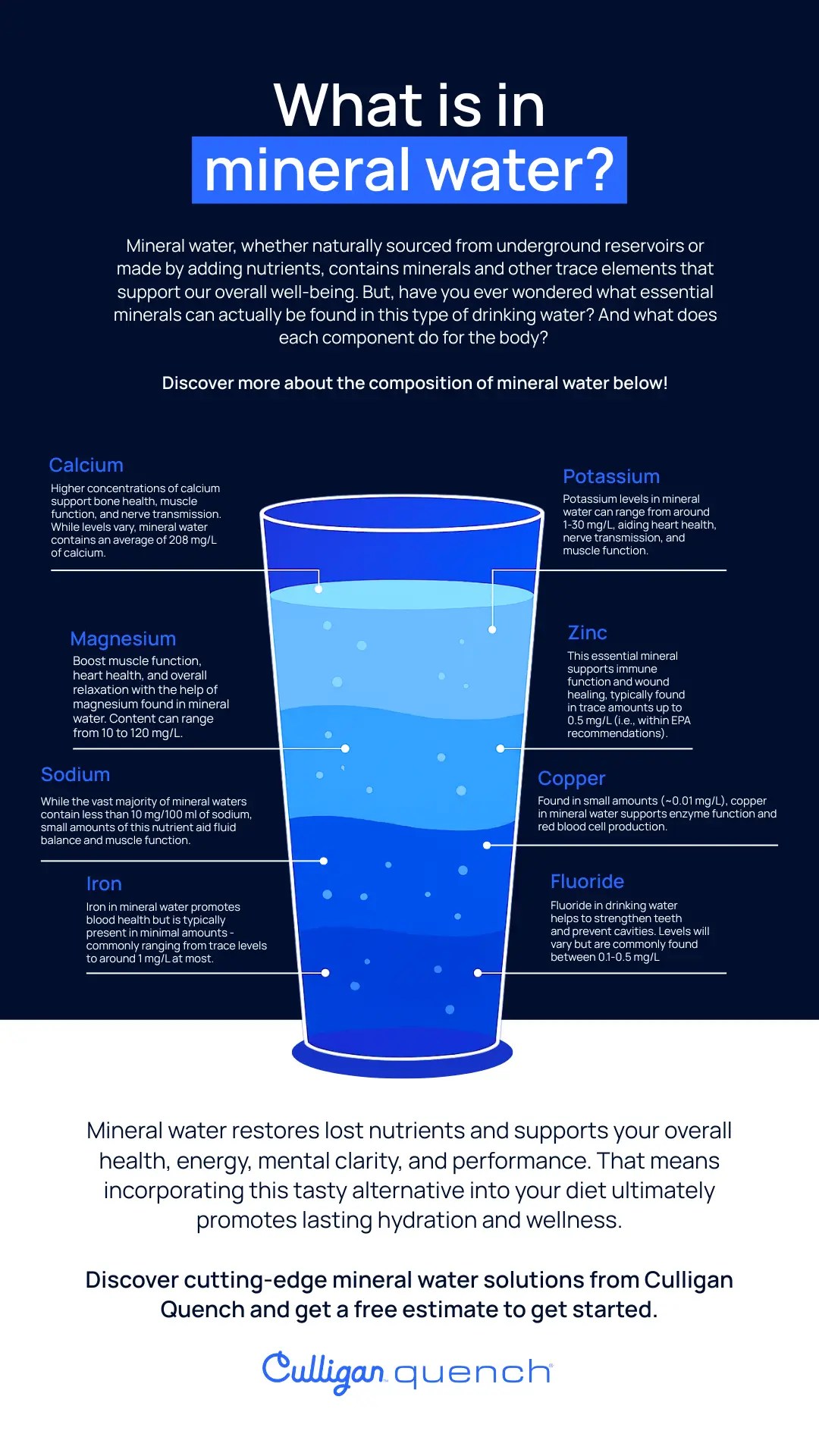 Here’s a quick breakdown of how mineral water differs from common alternatives:
- Tap water: Regular water is supplied through municipal systems and doesn’t contain the mineral content offered by mineral water sources. This often means the water supply is subject to additives or contaminants based on your local water treatment processes.
- Spring water: This type of water originates from a natural spring or underground source and is often perceived as pure because of its natural filtration process. It may contain natural minerals, but it generally doesn’t meet the ppm requirement to be classified as mineral water.
- Distilled water: Distilled water is created through a distillation process that involves boiling water and collecting the steam. It doesn’t contain any minerals or impurities at all. This water type is typically recommended for specific applications requiring pure water or medical use, rather than drinking.
- Soda water: While both mineral water and soda water can be carbonated by adding pressurized carbon dioxide gases, plain carbonated soda or seltzer water isn’t a natural source of essential minerals.
- quenchWATER+: Unlike “natural” sources that may be vulnerable to groundwater runoff or PFAS, quenchWATER+ is certified to reduce contaminants. We use a five-stage process to strip water of all impurities before reintroducing a consistent, 8.0+ pH mineral blend.
The rise in mineral water demand
Recent years have seen a rise in demand for mineral water as a source of daily hydration.
There are a few key reasons for this, including:
- Consumers’ increasing focus on wellness and a shift towards healthier beverage choices
- An increasing demand for sustainable and innovative products
- Rising concerns about additives or contaminants in tap water
- The widespread adoption of technology
According to a LinkedIn report, the projected global Mineral Water market size is expected to reach multimillion-dollar figures by 2030. This growth shows an unexpected and significant compound annual growth rate between 2023 and 2030 compared to what was observed in 2021.
The projected global Mineral Water market size is set to reach multimillion-dollar figures by 2030.
Key health benefits of drinking mineral water
Here are some of the top health benefits of mineral water.
1. Improved mineral intake
Mineral water is a rich source of essential minerals, such as calcium, magnesium and potassium, all of which are crucial for optimal health and bodily functions. These healthy minerals are a linchpin in maintaining bone strength, muscle function, nerve transmission and more. Regular consumption is a convenient and effective way to meet daily mineral requirements.
2. Enhanced hydration
With its natural composition and mineral content, this type of water is ideal for promoting superior hydration compared to regular water. The presence of minerals, such as magnesium and potassium, supports better water absorption and retention within cells, which is essential for replenishing electrolytes lost throughout the day. Because mineral water is hydrating, drinking it can help with your energy levels, endurance and overall bodily functions.
Why mineral water from Culligan Quench is better
Most people drink mineral water for the taste and health perks, but not all mineral water is created equal. While store-bought bottles often contain microplastics, Culligan Quench provides industrial-grade filtration paired with health-grade mineralization.
Reverse osmosis is a high-pressure purification method that pushes water through a semipermeable membrane. This removes impurities, such as chlorine, lead and microplastics. The Mineral+ alkaline water filter adds calcium, sodium, magnesium and potassium, producing mineral water that tastes great and doesn’t contain any dissolved solids.
According to the U.S. Geological Survey, at least 45% of the tap water in the United States may be contaminated with forever chemicals (PFAS). These chemicals pose serious health risks, so many people are seeking healthier alternatives. All mineral water tastes good, but only reverse osmosis removes forever chemicals and other impurities, making quenchWATER+ a safer alternative.
3. Better digestive health
The mineral composition of mineral water, particularly magnesium sulfate and bicarbonate, can aid digestion. These dissolved minerals may help alleviate indigestion, constipation or other digestive discomforts by promoting smoother digestion and supporting a healthier gut environment.
4. Stronger bones
Mineral water is rich in calcium and magnesium, which, as the National Institutes of Health highlights, supports the development of strong bones. As a result, regular consumption of mineral water may help maintain bone density and fortification, reducing the risk of osteoporosis and fractures.
5. pH balance support
Most types of mineral water are also considered alkaline water, which some studies suggest can potentially help balance body pH levels. This counteracts the acidity in the body, possibly reducing the risk of acid-related health issues.
6. Antioxidant properties
Some mineral waters contain trace elements with antioxidant properties, such as selenium or zinc. These antioxidants are effective against free radicals, potentially reducing oxidative stress on cells. This means regularly consuming mineral water is also linked to improved cellular health, possibly lowering the risk of oxidative damage-related health issues.
Looking at the potential risks of excessive mineral water consumption
In general, consuming mineral water is an effective means of daily hydration and typically lacks side effects unless consumed excessively. But can you drink too much mineral water? In extreme cases, yes. Consuming too much mineral water may have the following effects.
1. Excessive mineral intake
Once you’ve surpassed the recommended consumption levels of mineral water, you may experience imbalances or complications due to an overload of certain minerals, such as calcium or magnesium. This can lead to health problems or discomfort, such as kidney stones or diarrhea.
2. High sodium levels
Some mineral water options contain elevated sodium levels, particularly those with high mineral content. Excessive consumption can contribute to increased sodium intake, which may potentially affect blood pressure levels, increasing the risk of heart disease or stroke, or aggravating conditions such as hypertension.
3. Potential impacts on specific health conditions
Drinking too much mineral water might negatively impact individuals with certain health conditions. For example, this water may worsen kidney function in those with kidney issues. For those with hypertension, elevated mineral consumption can further increase blood pressure, worsening the condition.
4. BPA exposure from bottled mineral water
One of the most common concerns surrounding bottled mineral water consumption is the potential BPA exposure. BPA, or bisphenol-A, is a chemical compound that’s found in plastics and has hormone-disrupting properties, potentially leading to health issues. Prolonged exposure can result in severe health implications, such as reproductive issues and the increased risk of certain cancers.
Beyond plastic leaching, a recent U.S. Geological Survey (USGS) study highlights the prevalence of forever chemicals (PFAS) in both tap and some bottled natural spring sources. Our safety-first approach uses reverse osmosis, the only technology proven to effectively remove these persistent chemicals, ensuring your mineral water is as pure as it is flavorful.
With these potential consequences of drinking mineral water in mind, it’s important to note that moderate consumption typically doesn’t yield specific health consequences. Plus, opting for a point-of-use mineral water source can help you eliminate risks of BPA exposure to ensure optimal hydration and long-term health.
Driving hydration with mineral water
Because of mineral water’s natural mineral composition, this option is a reliable source of improved hydration, helping individuals replenish essential minerals lost during daily activities. Its crisp taste and dissolved minerals make it a delicious drinking water alternative that can encourage greater water intake.
As a result, individuals enjoy increased energy levels, improved cognitive function, enhanced physical performance and more. Implementing a mineral water solution at home or in your business could be the next step toward encouraging better hydration for everyone’s health.
Elevate your workplace water systems with Culligan Quench
If you’ve been looking for a way to supply your workplace with an endless supply of filtered mineral water, Culligan Quench can help. Culligan Quench stands as a reliable water service provider, offering users access to top-tier bottleless water dispensers. With quenchWATER+, our cutting-edge filtration system, you can access highly filtered water that retains essential minerals vital for health. This innovative filtration and mineral add-back system guarantees clean, refreshing water without compromising on the minerals crucial for optimal well-being.
Ready to elevate your water systems with access to delicious mineral water on demand? Try our product finder to get matched with the machine that’s right for your needs, or get a free quote to get started.
Authored by
Elizabeth Smith
Elizabeth Smith is a seasoned writer with a background in science and technology, now focused on workplace wellness, sustainability, and smart business solutions. With more than a decade of experience writing for universities and private companies in the engineering and tech sectors, she brings a research-driven approach to every topic.

Reviewed by
Cari Dienstman
Cari Dienstman is the Senior Website & Content Manager at Culligan Quench, with over six years of experience creating content focused on point-of-use water filtration. She holds a master’s degree in Digital Marketing from Brandeis University and a bachelor’s degree in Journalism from Temple University.