Discover certified systems you can trust for cleaner, safer water.
Culligan Quench products undergo rigorous testing before they’re consumer-ready. So you never compromise on quality or filtration performance. Backed by 90 years of water filtration expertise, we ensure the safety and effectiveness of our products by having them certified by third parties.
Meet the organizations that test our products and certify their safety.
IAPMO R&T provides Culligan Quench’s plumbing, water treatment and filtration certifications.
With over 95 years of experience, IAPMO R&T is the global leader in evaluating the safety and effectiveness of products and systems, including plumbing and drinking water treatment. IAPMO R&T’s Water Systems Certification Program is designed to deliver confidence to regulators, inspectors, manufacturers, distributors, installers, engineers and customers that the products have been tested and certified to the applicable standards.
Learn more
Electrical and equipment certification providers.
Independent electrical safety certification helps provide confidence that products have been evaluated to recognized North American safety standards. We work with nationally recognized certification organizations—including UL Solutions, Intertek (ETL), and IAPMO EGS—to test and certify our products for compliance with applicable electrical safety standards. Certification includes product testing, construction reviews, and ongoing factory inspections to help verify continued compliance with the requirements of the applicable standard(s). While certification marks may differ, each organization evaluates products to the same applicable safety standard(s), providing independent verification of compliance.
Learn more
| Organization | Role of organization |
| EPA | Sets drinking water contaminant limits. |
| NSF | Develops consensus product standards. |
| ANSI | Accredits the standards development process. |
| IAPMO R&T | Independently tests, inspects, and certifies products. |
| IAPMO EGS | Independently tests, inspects, and certifies products. |
| UPC | A set of national standards that ensures plumbing systems and products are safe, sanitary, and reliable. |

Explore water quality certifications.
NSF develops internationally recognized consensus standards for drinking water products, while ANSI accredits the standards development process. Independent certification organizations such as IAPMO R&T evaluate and certify products to these NSF/ANSI standards, providing confidence that certified water filtration systems have been independently tested for material safety, structural integrity, and verified performance. Depending on the certification, these standards may verify claims such as chlorine taste and odor reduction, contaminant reductions, and other important aspects of drinking water treatment performance.


Explore electrical safety certifications.
Culligan Quench uses three ANSI-accredited third-party certification companies to certify our dispensers for electrical safety: ETL (Intertek), UL (Underwriters Laboratories), and IAPMO EGS. All three are OSHA-recognized Nationally Recognized Testing Laboratories, and a listing from any of them is proof that the product has been independently tested and verified to comply with North American electrical safety standards.


See our certified products.
Water Coolers
Providing a range of cold, hot and ambient water in various sizes and capacities, the core products within our suite of Purity and Q-Series Bottleless Water Coolers are certified to reduce lead, chlorine and other contaminants in water. And with reverse osmosis (RO) filtration, you’ll gain certified protection against even more.
Plus, our integrated LED-UV technology is an added product feature. Depending on the model, the LED-UV system is located within the water reservoirs or at the point of dispense and is designed to operate automatically as part of the product’s normal operation. The LED-UV system is incorporated into the product design to help maintain the cleanliness of these areas.
Here’s a look at everything the Purity and Q-Series is certified to protect against:
Culligan Purity Prime
| Certification | Type | What it’s certified to protect against | Why this filtration is important |
| NSF 42 | Water |
|
Improves the aesthetics of water including taste, smell and clarity. |
| NSF 53 | Water |
|
Reduces contaminants that can have negative health effects. |
| NSF 55 Class A | Water |
|
Certifies that the UV system disinfects water by inactivating disease-causing microorganisms. |
| NSF P231 | Water |
|
Certifies the system performs as a microbiological water purifier against disease-causing organisms. |
| US EPA Guide Standard and Protocol for Testing Microbiological Water Purifiers | Water |
|
Verifies the system meets the federal benchmark for microbiological purification. |
| NSF 61 | Water |
|
Certifies that plumbing parts are safe for drinking water and meet the lowest lead-leaching threshold. |
| NSF 372 | Water |
|
Certifies that the product is made from lead-free materials. |
| CSA B483.1 | Water |
|
Certifies system meets Canadian safety material and performance requirements for reducing harmful substances in drinking water. |
Culligan Purity Advanced Pro
| Certification | Type | What it's certified to protect against | Why this filtration is important |
| NSF 42 | Water |
|
Improves the aesthetics of water including taste, smell and clarity. |
| NSF 53 | Water |
|
Reduces contaminants that can have negative health effects. |
| NSF 58 (for RO only) | Water |
|
Reduces contaminants that can have negative health effects. |
| NSF 55 Class A | Water |
|
Certifies that the UV system disinfects water by inactivating disease-causing microorganisms. |
| NSF P231 | Water |
|
Verifies the system meets the federal benchmark for microbiological purification. |
| US EPA Guide Standard and Protocol for Testing Microbiological Water Purifiers | Water |
|
Verifies the system meets the federal benchmark for microbiological purification. |
| NSF 61 | Water |
|
Certifies that plumbing parts are safe for drinking water and meet the lowest lead-leaching threshold. |
| NSF 372 | Water |
|
Certifies that the product is made from lead-free materials. |
| CSA B483.1 | Water |
|
Certifies system meets Canadian safety material and performance requirements for reducing harmful substances in drinking water. |
Culligan Purity Essential, Advanced, and Advanced Plus
| Certification | Type | What it’s certified to protect against | Why this filtration is important |
| NSF 42 | Water |
|
Improves the aesthetics of water including taste, smell and clarity. |
| NSF 53 | Water |
|
Reduces contaminants that can have negative health effects. |
| NSF 58 (for RO only) | Water |
|
Reduces contaminants that can have negative health effects. |
| NSF 61 | Water |
|
Certifies that plumbing parts are safe for drinking water and meet the lowest lead-leaching threshold. |
| NSF 372 | Water |
|
|
| CSA B483.1 | Water |
|
Certifies system meets Canadian safety material and performance requirements for reducing harmful substances in drinking water. |
Q3, Q4, Q5, Q8
| Certification | Type | What it’s certified to protect against | Why this filtration is important |
| NSF 53 | Water |
|
Reduces contaminants that can have negative health effects. |
| NSF 42 | Water |
|
Improves the aesthetics of water including taste, smell and clarity. |
| NSF 58 (for RO only) | Water |
|
Reduces contaminants that can have negative health effects. |
| NSF 372 | Water |
|
Certifies that the product is made from lead-free materials. |
| NSF 61 | Water |
|
Certifies that plumbing parts are safe for drinking water. |
| CSA B483.1 | Water |
|
Certifies system meets Canadian safety material and performance requirements for reducing harmful substances in drinking water. |
| UL 399/CSA C22.2 | Electrical |
|
Certifies US and Canadian electrical safety. |
Q12
| Certification | Type | What it’s certified to protect against | Why this filtration is important |
| NSF 372 | Water |
|
Certifies that the product is made from lead-free materials. |
| UL 399/CSA C22.2 | Electrical |
|
Certifies US and Canadian electrical safety. |
Q14
| Certification | Type | What it’s certified to protect against | Why this filtration is important |
| UL 399/CSA C22.2 | Electrical |
|
Certifies US and Canadian electrical safety. |
| NSF 372 | Water |
|
Certifies that the product is made from lead-free materials. |
| CSA B483.1 | Water |
|
Certifies system meets Canadian safety material and performance requirements for reducing harmful substances in drinking water. |
| NSF 61 | Water |
|
Certifies that plumbing parts are safe for drinking water. |
Twist Flavored Water Dispenser
| Certification | Type | What it’s certified to protect against | Why this filtration is important |
| NSF 372 | Water |
|
Certifies that the product is made from lead-free materials. |
| CSA B483.1 | Water |
|
Certifies that system meets Canadian safety material and performance requirements for reducing harmful substances in drinking water. |
| NSF 18 | Sanitation |
|
Certifies cleanability, material safety and prevention of contamination. |
| UL 399/CSA C22.2 | Electrical |
|
Certifies US and Canadian electrical safety. |
Concerned about your water quality?
TDS readings are sourced from Culligan ZeroWater and Culligan Testing Labs samples across more than 13,000 U.S. ZIP codes. Levels can vary by water provider, season, and even by building — think of this as a starting point, not a reading from your tap.
Based on these levels, carbon filtration is the best choice.
Based on these levels, carbon filtration is appropriate. Consider RO if you prefer exceptionally low-mineral, premium-tasting water.
Based on these levels, reverse osmosis is recommended for improved taste, reduced dissolved minerals, and less scale.
Based on these levels, reverse osmosis is strongly recommended for the best drinking water experience.
Access Culligan’s advanced filtration solutions to keep workplace water cleaner and safer.
Depending on the quality of your water supply, you’ll choose either RO filtration or carbon filtration. While RO filtration provides a more advanced, intensive filtration process, carbon filtration is a more cost-effective solution for workplaces with a treated water supply.
Here’s a look at what each option addresses →
| Reverse osmosis filtration | Carbon filtration | |
| Lead |
 |
|
| Cysts |
|
|
| Chlorine |
|
|
| Total Dissolved Solids |
|
- |
| Arsenic |
|
- |
| PFAS |
|
- |
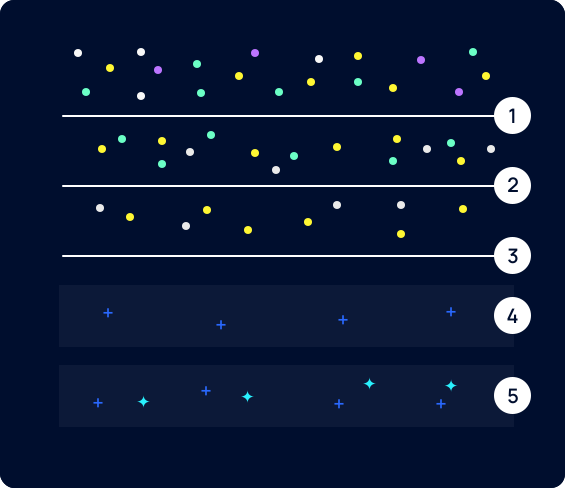
See how reverse osmosis filtration works.
Step 1 Removes sediment particles
Step 2 Pre-carbon filtration reduces chlorine
Step 3 RO membrane filters a wide range of contaminants including lead and PFAS
Step 4 Recharges minerals and pH (with quenchWATER+)
Step 5 Post-carbon filtration polishes taste
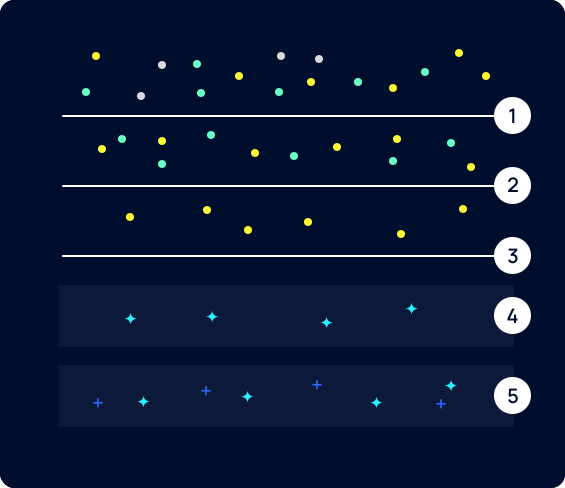
See how carbon filtration works.
Step 1 Removes dirt and sediment
Step 2 Removes chlorine and odors
Step 3 Reduces lead
Step 4 Polishes taste
Step 5 Recharges minerals (with quenchWATER+)
Ice machines
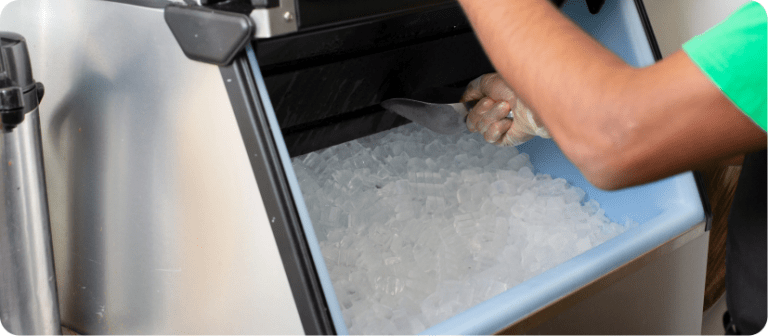
When it comes to providing ice to keep your employees and customers cool and refreshed, the quality of your system is just as important as the taste and texture of the ice. That’s why our products are certified to deliver safe, high-quality ice from lead-free systems that meet strict electrical standards.
Here’s a look at what some Culligan Quench ice machines are certified for:
960, 965, 956, 960-16, 965-16
| Certification | Type | What it’s certified to protect against | Why this filtration is important |
| NSF 372 | Water | Lead | Certifies that the product is made from lead-free materials. |
| NSF 61 | Water | Unsafe plumbing parts | Certifies that plumbing parts are safe for drinking water. |
| CSA B483.1 | Water | Harmful substances | Certifies system meets Canadian safety material and performance requirements for reducing harmful substances in drinking water. |
| UL 399/CSA C22.2 | Electrical | Unsafe electrical components | Certifies US and Canadian electrical safety. |
| UL 563 | Electrical | Unsafe electrical components | Certifies the electrical safety of automatic ice makers. |
980-12, 980-90
| Certification | Type | What it’s certified to protect against | Why this filtration is important |
| UL 763 | Electrical | Unsafe electrical and mechanical components | Certifies that the machine’s motor is safe from risk of electric shock, fire and other hazards. |
| UL 399/CSA C22.2 | Electrical | Unsafe electrical components | Certifies US and Canadian electrical safety. |
| UL 563 | Electrical | Unsafe electrical components | Certifies the electrical safety of automatic ice makers. |
980-30
| Certification | Type | What it’s certified to protect against | Why this filtration is important |
| NSF 12 | Water | Food and sanitation issues | Certifies the safety of the materials, design, construction and performance of automatic ice makers. |
Sparkling and enhanced water dispensers
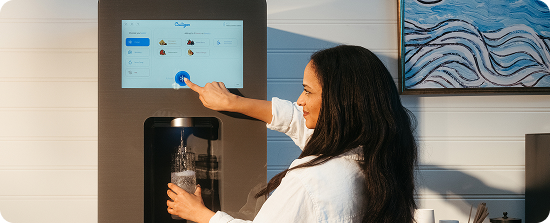
With Culligan Quench, you can serve delicious sparkling water with confidence, knowing our systems are certified for safety and performance.
Here’s a look at what our sparkling water dispensers are certified for:
533
| Certification | Type | What it’s certified to protect against | Why this filtration is important |
| NSF 372 | Water | Lead | Certifies that the product is made from lead-free materials. |
| NSF 61 | Water | Unsafe plumbing parts | Certifies that plumbing parts are safe for drinking water. |
| UL 399/CSA C22.2 | Electrical | Unsafe electrical components | Certifies US and Canadian electrical safety. |
Vero Products
| Certification | Type | What it’s certified to protect against | Why this filtration is important |
| NSF 372 | Water | Lead | Certifies that the product is made from lead-free materials. |
| NSF 61 | Water | Unsafe plumbing parts | Certifies that plumbing parts are safe for drinking water. |
Twist Flavored and Sparkling Water Dispenser
| Certification | Type | What it’s certified to protect against | Why this filtration is important |
| NSF 372 | Water | Lead | Certifies that the product is made from lead-free materials. |
| CSA B483.1 | Water | Harmful substances | Certifies that system meets Canadian safety, material, and performance requirements for reducing harmful substances in drinking water. |
| NSF 18 | Sanitation | Unsanitary equipment | Certifies cleanability, material safety and prevention of contamination. |
| UL 399/CSA C22.2 | Electrical | Unsafe electrical components | Certifies US and Canadian electrical safety. |
Frequently asked questions
Is a UL better than ETL ?
Both UL Listed and ETL listed marks indicate that a product has been independently certified to the same applicable safety standard. The primary difference is the certification organization that performed the evaluation and ongoing compliance activities. Both entities are ANSI-accredited and in terms of compliance and safety.
Why are certifications an important consideration when choosing solutions for workplace hydration?
Certifications verify the safety and quality of the systems you use to serve employees, customers and visitors – from the water and ice they enjoy to the electrical equipment that’s installed in your workplace. Ensuring your systems are certified is critical for protecting both your people and your business from contamination and potential liability.
What types of certifications should we look for?
It’s best to look for certifications from nationally or globally recognized organizations. These include the NSF/ANSI standards for water quality and the ETL/UL standards for electrical safety. An easy way to check for the proper certifications is to look for their badges (shown above).
How do certifying bodies determine if a product meets certain standards?
Certifying bodies like IAPMO and Intertek perform rigorous, independent testing of each system to ensure it meets the standards defined by each certification.
What types of certifications do Culligan Quench products hold?
Culligan Quench solutions are certified for water quality and electrical safety, with certifications that range from contaminant reduction to mechanical performance.
Is quenchWATER+ lead-certified?
Yes, our carbon and reverse osmosis filters hold NSF 53 and NSF 58 certifications, respectively, for lead reduction.
Which Quench systems are PFAS-certified?
Our Q3, Q4, Q5, Q8 Bottleless Water Coolers with a reverse osmosis filter hold the NSF 58 certification for reducing PFAS by 98.38%. NSF 58 is a certification designed to recognize systems that reduce contaminants that can cause negative health effects.