Filtration technology
What Are Total Dissolved Solids and Are They Safe to Drink?
Updated: Dec 30, 2025 |
Published: Nov 22, 2022

Authored by
Amanda Russo
Amanda Russo, Founder and Chief Creative Officer of Creative Salt, has nearly two decades of experience in writing marketing communications and educational content for audiences across industries. Working with Culligan over the past two years, she has gained an extensive background in water quality and water treatment. She holds a Bachelor’s degree from the University of Illinois in English and Rhetoric.
Key Takeaways
Ensuring clean, safe drinking water at work protects health and boosts productivity.
Here’s what you need to know:
- What TDS means: Total dissolved solids include minerals, salts, and metals in water, measured in PPM with meters or test kits.
- Health impact: Safe TDS ranges from 300–500 PPM; too high or too low can cause health problems.
- Best filtration: Carbon filters improve taste; reverse osmosis removes most contaminants, with remineralization keeping essential minerals.
- Hydration matters: Filtered water supports employee health, focus, and productivity, making regular water breaks more effective.
Summary: Total dissolved solids (TDS) in drinking water include minerals, salts, and metals, and their levels affect both safety and taste. Providing filtered, properly balanced water in the workplace supports employee health, hydration, and productivity.
Everybody prefers odorless, tasteless water to drink, and its accessibility is something many Americans might take for granted. Although it’s great to find a workplace that values offering safe, accessible drinking water to employees, it’s actually the law.
According to the Occupational Safety and Health Administration, the expectation for employers in the United States is to “provide potable drinking water in amounts that are adequate to meet the health and personal needs of each employee,” and “The employer shall dispense drinking water from a fountain, a covered container with single-use drinking cups stored in a sanitary receptacle or single-use bottles.”
The employer shall dispense drinking water from a fountain, a covered container with single-use drinking cups stored in a sanitary receptacle or single-use bottles.
This means that, as an employer, you’re expected to provide employees with access to potable drinking water. If state or municipal water is considered potable, then that ‘should’ be enough, right? Not always. In many locations across the country, tap water often meets the bare minimum EPA filtration and sanitization requirements – meaning it’s possible your workplace tap water contains contaminants even if it’s been treated by local water treatment plants.
It’s also important to note that there should be enough water for everyone at the workplace to have their allotted recommended amount. The adage of 8 cups a day holds true and can be used as a guide when considering how much water you need for your staff. You can save time calculating by installing a bottomless clean water source.
Employers should make sure that they provide their employees with safe drinking water by installing a filtration system that removes contaminants like bacteria, viruses and heavy metals from tap or surface water. The better hydrated, healthier and happier your employees are, the better and more productive they’re going to feel.
What is TDS in water?
Total Dissolved Solids (TDS) are dissolved matter like minerals, salts, metals, cations or anions in water. TDS in water are measured in milligrams per liter (mg/L) or parts per million (ppm), which represents the total amount of dissolved solids in a given volume of water.
TDS can be organic and inorganic substances that can be picked up as water moves throughout the environment before reaching your tap. They are essentially all the good and bad elements in your drinking water.
The higher the TDS, the more minerals are dissolved in the water. The World Health Organization (WHO) sets out guidelines for drinking water quality that include the recommendation that water with TDS below 300 PPM is considered safe for drinking. However, most authorities accept 500 PPM.
In the United States, the average is 350 PPM of TDS in standard drinking water from the tap. Although this is over the WHO recommendations, it’s still considered safe to drink. It’s important to note that with measurements being predicted in parts per million, it’s going to take some sophisticated equipment to catch every substance. Usually, total dissolved solids are tested using a TDS meter which uses electricity to determine the conductivity of the water and uses that data to determine TDS level results.
It’s a good idea to know the types of substances that can be found in drinking water – and in some cases, their health implications. Some of these include:
Organic substances:
- Algae
- Bacteria
- Disinfectants
- Hair
- Herbicides
- Pesticides
Non-organic substances:
How do you measure TDS in workplace water?
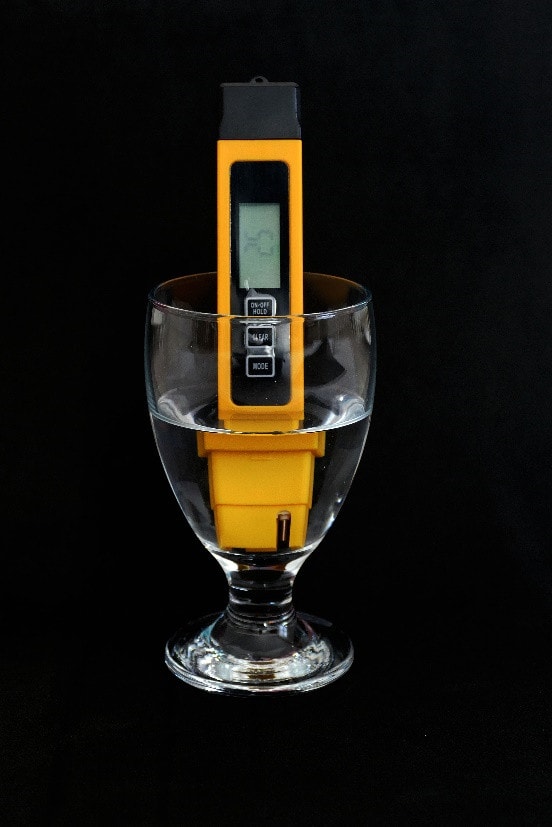
There are two common ways to test for TDS in water:
Test kits
The most common way to test TDS in water is by using a water hardness test kit. This will give you the total dissolved solids in your water.
TDS meters
TDS meters will give you an accurate reading of the TDS levels in your water. A TDS meter is a small, hand-held device that can test TDS through electrical conductivity. TDS essentially represents the number of ions in the water. Those ions increase the conductivity of the water, so the TDS meter measures the conductivity of the drinking water and estimates the TDS from that reading.
TDS can also be evaluated through an evaporative salt test, which measures the concentration of dissolved salts in the water by weight. Or, through an ion exchange test, which measures the concentration of ions in a solution by weight.
You have to be careful about how you measure TDS in water because it can be misleading if it’s not done properly. If you use the wrong type of test kit, you could end up with inaccurate readings that are too high or too low, depending on the type of kit used. We’ll also point out here that some minerals are so small that they won’t even get picked up by the kits you could purchase for your workplace. Therefore, trusting a filtered, safe drinking water solution is much more reliable and time-efficient.
Do total dissolved solids in drinking water present health risks?
As found by WHO, TDS in drinking water primarily originates from natural sources, sewage, industrial waste, urban run-off and chemicals used in the water treatment process. Inorganic minerals are considered inert because they don’t contain enzymes and therefore aren’t usable in the physiological process of human cell growth. These harmful minerals accumulate because the body cannot excrete or use them.
In most instances, TDS in your drinking water will not present a health problem. However, it’s important to note that should TDS levels exceed 1,000 mg/L, the drinking water can be considered unfit for human consumption. If you’re interested in finding out what solids are in your drinking water, it can be useful to have a TDS water meter available at your workplace. This is a small hand-held device used to indicate the amount of total dissolved solids. Additionally, you can invest in a water test kit that will tell you exactly what’s in your water – including the good and bad dissolved solids.
The major concerns with high TDS in drinking water
There are many concerns about high total dissolved solids in drinking water. Some of the biggest issues are that high total dissolved solids can lead to kidney stones, especially when hard water levels are over 500 PPM, and other health problems like heart disease and diabetes. High TDS water can lead to gastrointestinal problems, such as stomach pain and diarrhea, and in extreme cases, cause kidney disease, liver disease and even death.
High TDS in drinking water can also cause an unpleasant taste or smell in the water, which would lead some people to choose not to drink it. In effect, this can lead to dehydration. As previously mentioned, dehydration can become a serious health problem, but it also affects cognitive ability in the workplace.
Signs that tap water may have elevated levels of TDS include nausea and vomiting, dizziness, and diarrhea.
How high TDS water affects the health of each person will also be determined by the solids present in the water. Drinking water contaminated with an elevated level of human feces, such as what might be found in a public bathroom sink, could make the drinker much sicker than drinking water with high levels of sodium or sugar.
Zero or a very low TDS level in drinking water, for example, between 50 and 250 PPM can also be detrimental to our health. Not every dissolvable solid in water is unhealthy. Minerals such as magnesium, calcium and some organic matter such as amino acids and natural sugars can be beneficial additions to our diets. Therefore, it’s helpful to take an approach to filtering TDS with a grain of dissolved salt – literally – between 300 – 500 PPM. TDS filters can eliminate high concentrations of toxins from drinking water, like lead, and leave behind those minerals and vitamins we need.
The benefits of encouraging proper hydration at work
It’s easy for employees to get absorbed in their daily work. Some may not even consider hydration until lunch and may end up choosing soda, coffee or other diuretic beverages to energize themselves. According to a National Coffee Data Trends report, in 2021, 58% of Americans drank coffee every day. While we spend much of our time at work, this number can add up when we’re attempting to keep our focus sharp and stay productive. But filtered drinking water can be just as effective.
Research from the National Library of Medicine states that even a dehydration rate of 1% can noticeably impact the cognitive ability of a worker by 12%. A 4% dehydration rate brings the lack of productivity in employees to a rate of 25%.
Therefore, if four employees are feeling dehydrated, you’re losing out on an entire employee’s worth of labor. It’s an interesting consideration because studies also report that 75% of Americans are chronically dehydrated.
So, while employers may feel their staff is doing ‘just fine’ with filling up their water bottles from the break room tap – or dare we say it, the bathroom sink – just think about how much better the overall productivity of the workplace will be simply by promoting water breaks and encouraging hydration with a filtered system.
A dehydration rate of 1% can noticeably impact the cognitive ability of a worker by 12%.
We shouldn’t need to point out that, not just employees, but no one, should be drinking water from the same room as a toilet. It’s unsanitary and can lead to serious health implications and possible legal implications if an employee gets sick.
Effective hydration from filtered or distilled water leads to higher productivity, better mental clarity and an overall sense of well-being. By removing the odors and tastes resulting from bacteria, chemicals and more (all considered TDS), water just tastes better, is more likely to be consumed regularly and will quickly make a difference in the health and happiness of employees.
Better water with Culligan Quench
Take a step that gives you high-quality, filtered, and refreshing water with a Culligan Quench bottleless water dispenser.
More about Culligan Quench technologies:
Carbon filtration
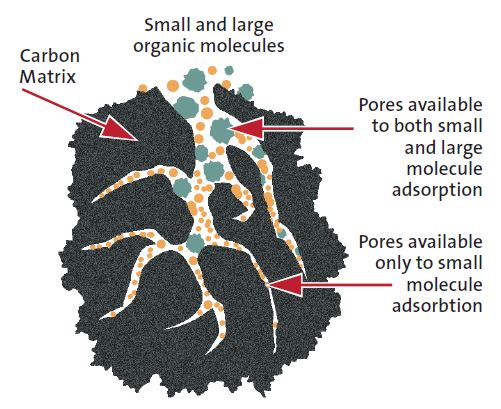
Infographic courtesy of elgalabwater.com
Carbon filtration is a process that removes impurities from water by adsorbing them on the surface of activated carbon. This system removes chemicals and other substances from water that can cause health problems or unpleasant tastes and odors. The process of carbon filtration is simple and efficient. The water passes through a filter that contains activated carbon particles that are in contact with air. The air will cause the particles to oxidize and release electrons that will bind to contaminants in the water, such as organic compounds or metals, rendering them harmless for consumption.
Some of the most common substances removed by carbon filters are chlorine, lead, mercury, benzene and MTBE. Culligan Quench carbon filters are the first line of defense against bad taste, odor and color. Our water dispensers can filter harmful chemicals to deliver the highest quality and contaminant-free water.
Reverse osmosis
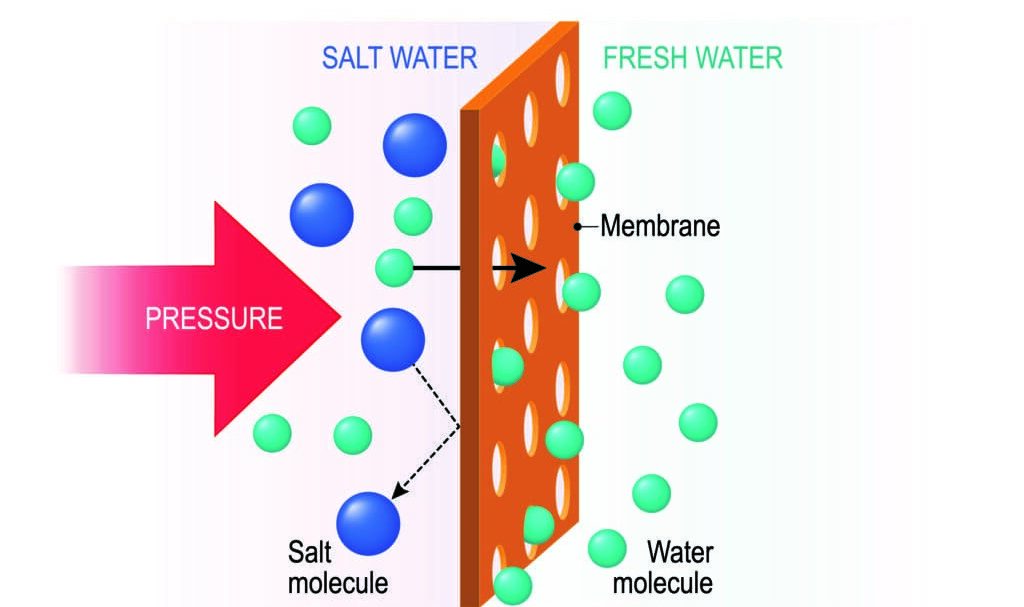
Reverse osmosis (RO) works by forcing water under great pressure against a semi-permeable membrane that allows molecules to pass through while excluding contaminants. RO provides a higher level of filtration by effectively removing dissolved substances such as acid, salts, nitrates, pesticides and arsenic, to name a few. You really don’t want any of these particles in your water as, apart from being unpleasant, chances are the particles may contain bacteria. This type of filtration is ideal when the water source is unknown or is known to carry contaminants in the water.
Reverse osmosis + remineralization
Because reverse osmosis is so effective at filtering out TDS in water, it can often remove minerals and essential electrolytes you’ll actually want to keep. Technology like our quenchWATER+ filtration adds calcium, magnesium, phosphorus, and sodium back into the water before dispensing it. That way you maintain an ideal level of the “good” TDS while filtering out the bad.
Comparing carbon filtration vs. reverse osmosis
Here’s a quick overview of the key differences between the two methods for removing TDS in water.
| Carbon filtration | Reverse osmosis | |
| Method | Contaminants are absorbed by activated carbon particles and removed from water | Water is pushed through a semi-permeable membrane that contaminants cannot pass through |
| Key contaminants removed | Chlorine, lead, mercury, benzene and MTBE | Those removed by carbon filtration plus many more, including viruses, bacteria, arsenic, iron and nitrate |
| Taste | Improves taste by removing contaminants like chlorine | Can result in a “flatter” taste because of its more comprehensive filtration |
| Wastewater | No | Yes |
| Cost | Typically at a lower price point | Typically at a higher price point |
Find your ideal TDS filtration solution from Culligan Quench
Culligan Quench is a US bottleless water dispenser provider offering a comprehensive filtration solution. Our full selection of bottleless dispensers ensures your employees receive cleaner, safer water. quenchWATER+ filtration reduces harmful levels of inorganic contaminants through sophisticated reverse osmosis filter systems while infusing water with electrolytes and essential minerals to support health and hydration in the workplace.
Bottleless water filter systems are also an excellent investment for an organization because they reduce the amount of waste produced by employees and remove the need for bottled water, which can be expensive for a company over time.
Get a free quote for any of our bottleless dispensers to start seeing the positive impact clean, safe drinking water can have on your employees.
Authored by
Amanda Russo
Amanda Russo, Founder and Chief Creative Officer of Creative Salt, has nearly two decades of experience in writing marketing communications and educational content for audiences across industries. Working with Culligan over the past two years, she has gained an extensive background in water quality and water treatment. She holds a Bachelor’s degree from the University of Illinois in English and Rhetoric.

Reviewed by
Cari Dienstman
Cari Dienstman is the Senior Website & Content Manager at Culligan Quench, with over six years of experience creating content focused on point-of-use water filtration. She holds a master’s degree in Digital Marketing from Brandeis University and a bachelor’s degree in Journalism from Temple University.
Frequently asked questions about TDS
What is a good TDS level for drinking water?
The ideal TDS level for drinking water is between 300 PPM and 500 PPM. While having too much TDS in water can cause negative health impacts, not having enough TDS can also be unhealthy. That’s because our bodies need some of the minerals classified as TDS, like magnesium and calcium.
Is high TDS dangerous?
Yes, it can be. Water that exceeds 1,000 PPM is considered unsafe for consumption because it can lead to gastrointestinal problems, kidney disease, liver disease and even death. Hard water levels higher than 500 PPM can also cause kidney stones, heart disease and diabetes. If you’re concerned about high levels of TDS in your workplace’s water supply, it’s smart to consider filtration options like those offered by Culligan Quench.
Does reverse osmosis remove TDS?
Yes, reverse osmosis is a very effective method of reducing TDS in water. Culligan Quench’s RO filtration system removes 99.9% of all contaminants and sediments in drinking water, bringing the TDS level down to just about zero.
TDS vs. contaminants—is there a difference?
While TDS measures the level of all solids in your water including salts and minerals, “contaminants” refers to a portion of those solids (and other substances) that are unwanted and can potentially be harmful to your health.