
Filtration technology
Chloramine in Water: Is it Good or Bad?
Published: Dec 26, 2025

Authored by
Elizabeth Smith
Elizabeth Smith is a seasoned writer with a background in science and technology, now focused on workplace wellness, sustainability, and smart business solutions. With more than a decade of experience writing for universities and private companies in the engineering and tech sectors, she brings a research-driven approach to every topic.
Summary: Chloramine is a common water disinfectant used to keep tap water safe, but it can produce byproducts and pose health risks at high levels. Using filtration methods like carbon filters and reverse osmosis can help ensure cleaner, better-tasting water for your home or workplace.
When you turn on your tap, chances are you’re getting more than just water. Utility companies often add chloramine to water to make it safe to drink. While there are government guidelines on acceptable chloramine levels, it’s important to understand how this additive can affect the quality of your local water supply.
Learn more about chloramine, why it’s used as a disinfectant and potential risks so you can make informed decisions about what you’re drinking. This guide also explores ways to remove chloramine from drinking water to provide your employees with pure, great-tasting water that supports their wellness.
What is chloramine?
Chloramines are compounds formed by combining chlorine and ammonia. Monochloramine, which is five parts chlorine to one part ammonia, is used to disinfect and protect drinking water.
According to the Water Quality Association, more than one in five Americans use water treated with chloramine.
Purpose of chloramine in water treatment
Before water gets to your home or business, it’s cleaned and filtered to remove sediment, germs, bacteria and harmful substances. Disinfection is the final treatment stage, where chemicals such as chlorine, chloramine and chlorine dioxide are added to water to eliminate remaining germs. Companies may also use ultraviolet light or ozone instead of or alongside chemical disinfectants.
Public water is disinfected in two stages:
- Primary disinfection kills bacteria, viruses and other dangerous organisms. This reduces the risk of illnesses such as hepatitis, cholera and typhoid fever.
- Secondary disinfection maintains water quality as it’s distributed to consumers. Chloramine is often used at this stage to protect water from germs as it travels through pipes to consumers.
Chloramine versus chlorine
The most common disinfectants are chlorine and chloramine. Chloramine is more stable than chlorine and protects water for longer. However, chlorine is stronger and more effective at removing biofilm, the layer of microorganisms that can develop on water pipes. Utility companies may alternate between the two disinfectants.
For consumers, chloramine may be a more appealing choice. Many people can smell residual chlorine when it’s used to disinfect water. Chloramine is less likely to have a detectable odor.
Every community has a different approach to treating water, depending on the water source and the levels of contaminants present. You can read your water company’s annual water quality report to learn what additives are being used to safeguard your water supply.
Is chloramine safe?
There are health risks associated with chloramines, but the Environmental Protection Agency (EPA) and the Centers for Disease Control believe the benefits of disinfecting water outweigh potential risks. The EPA has determined 4.0 mg/L of residual chloramines as a safe level.
Dangers of disinfection byproducts
When chloramine, chlorine and other disinfectants enter the water supply, they react with organic matter, such as plant and animal waste, and create harmful byproducts. The Environmental Working Group reports that hundreds of these toxic byproducts form in water. The government regulates and sets maximum allowable levels of some of these compounds, including chlorite, bromate, haloacetic acids and total trihalomethanes.
As concerns about chlorine byproducts increased, chloramine emerged as an alternative. It produces fewer byproducts but doesn’t completely eliminate them. For example, Nitrosamine is a chloramine byproduct and suspected carcinogen. Nitrosamines may cause cell damage, DNA mutations and cancer at even low levels of exposure.
Additional chloramine health risks
The most immediate risk with chloramine is for patients needing kidney dialysis. Chloramine and chlorine must be removed from water used in dialysis machines because the water comes into contact with blood. However, it’s safe for dialysis patients to drink chloraminated water.
Chloramine is harmful to fish, turtles, frogs and other aquatic animals. Prepare aquarium water by using a chloramine water treatment in advance.
Over the long term, human exposure to chloramines at levels above EPA guidelines also poses potential health risks. The compound has been associated with eye/nose irritation, stomach discomfort and anemia.
How to remove chloramine from water
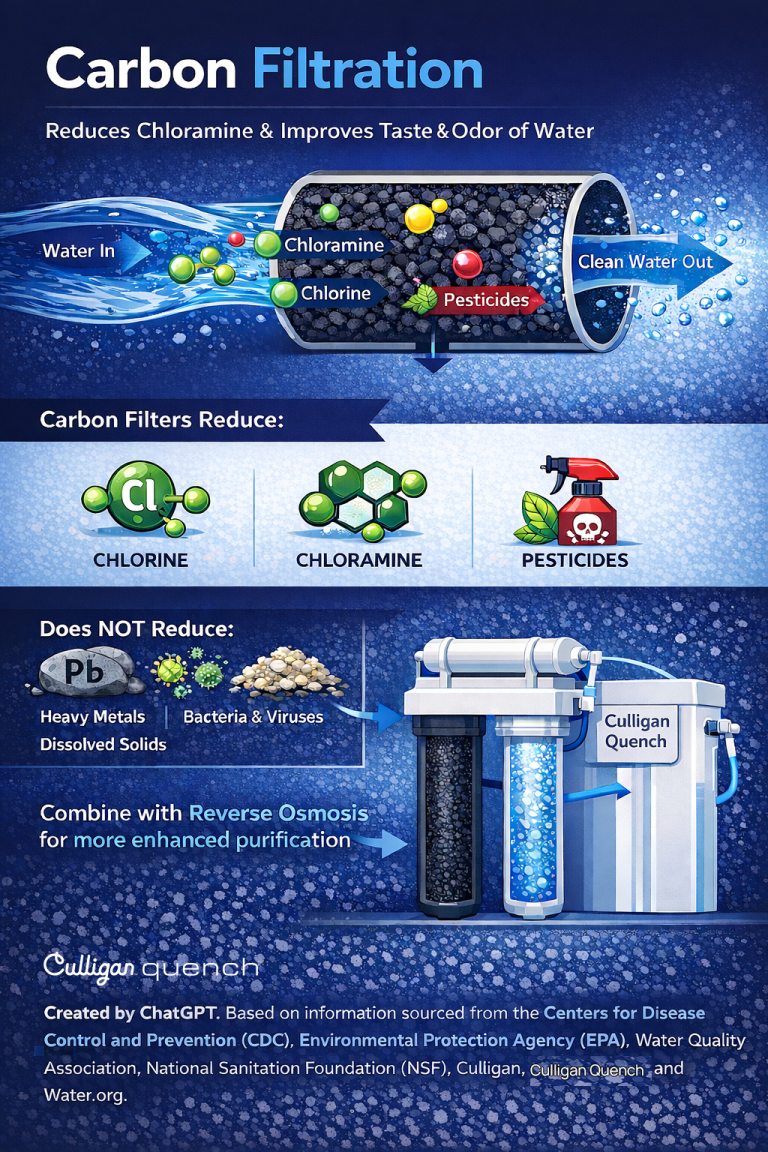
Disinfection is necessary to keep water safe to drink, but there are ways to reduce contaminant levels at the point of use. You can clean tap water by using water filters that remove chloramine, such as activated carbon, and reverse osmosis purification systems.
Boiling water doesn’t remove chloramine, chlorine and other chemicals. It’s only effective for killing bacteria, viruses and microorganisms that may cause disease.
Carbon filtration
Carbon filtration is the most effective way to remove chloramine, reducing impurities and improving the taste and smell of drinking water.
In a carbon filtration system, water passes through activated carbon particles. Unwanted substances cling to the surface of the carbon particles, where they’re trapped and removed from the water. Carbon filters are most effective for removing:
- Chlorine
- Chloramine
- Pesticides
This type of chloramine water filter won’t remove heavy metals, such as lead and arsenic, dissolved solids and bacteria or viruses — that’s where reverse osmosis comes in. However, you can combine carbon filters and reverse osmosis to take purification a step further.
Reverse osmosis
Reverse osmosis (RO) is a process that separates contaminants from water based on molecular weight. Water is pushed through a semipermeable membrane that only allows water and substances with lower molecular weight through. Undesirable contaminants, which have a higher molecular weight, are removed with wastewater.
Reverse osmosis doesn’t remove chloramine or chlorine but is effective for dissolved solids, salts, heavy metals and fluoride. However, many RO systems employ activated carbon as a prefilter to remove chloramine before it reaches the membrane.
Filtering workplace water with Culligan Quench
When you know what’s in your water supply and if your tap water is clean, you can choose a water solution that’s right for your workplace. Culligan Quench uses advanced water filtration and sanitization technology such as carbon filters, reverse osmosis and UV light to reduce contaminants and improve flavor and clarity.
Choose from countertop and freestanding water coolers, water dispensers with ice makers and sparkling water makers. Reach out for a free estimate, and we’ll customize a solution for you, or try our product finder to discover a system that fits your workplace size and hydration needs. With Culligan Quench’s smart water technology, you can enjoy fresh-tasting, pure water that enhances employee comfort, wellness and productivity.
Authored by
Elizabeth Smith
Elizabeth Smith is a seasoned writer with a background in science and technology, now focused on workplace wellness, sustainability, and smart business solutions. With more than a decade of experience writing for universities and private companies in the engineering and tech sectors, she brings a research-driven approach to every topic.

Reviewed by
Cari Dienstman
Cari Dienstman is the Senior Website & Content Manager at Culligan Quench, with over six years of experience creating content focused on point-of-use water filtration. She holds a master’s degree in Digital Marketing from Brandeis University and a bachelor’s degree in Journalism from Temple University.
Key Takeaways
Understanding chloramine in your water supply.
Here are the main points to remember from this guide:
- Purpose of chloramine: Chloramine is a disinfectant used in public water systems to maintain water quality and prevent harmful bacteria and pathogens during distribution.
- Chloramine vs. chlorine: While chloramine is more stable and has less odor than chlorine, it is weaker at removing biofilm and may still create potentially harmful byproducts.
- Health considerations: Chloramine is generally safe at regulated levels, but high exposure can cause irritation, and it is harmful to aquatic life and patients undergoing kidney dialysis.
- Removal methods: Carbon filtration and reverse osmosis systems are effective at reducing chloramine and other contaminants, ensuring cleaner, better-tasting water for workplaces and homes.