Trusted Pittsburgh
water solutions
Areas served
- Allegheny County
- Armstrong County
- Beaver County
- Butler County
- Fayette County
- Washington County
- Westmoreland County
- Lawrence County
- Mercer County
- Indiana County
- Erie County
- Cambria County
- Clarion County
- Crawford County
- Hancock County
- Brooke County
- Jefferson County
Bottleless dispensers fit for any business.
Bottleless water coolers
Offer a more sustainable solution for cleaner, better-tasting water on demand.
Ice
machines
Fast, efficient, and reliable ice and water machines with advanced filtration.
Sparkling water dispensers
Bottomless bubbles with built-in filtration for your modern workplace.
Filtered coffee brewers
Better water makes better coffee. Give your people great-tasting coffee from best-in-class brewers.
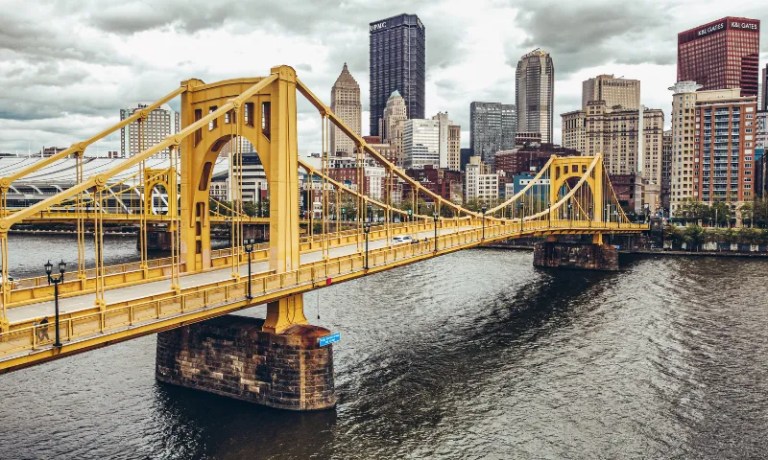
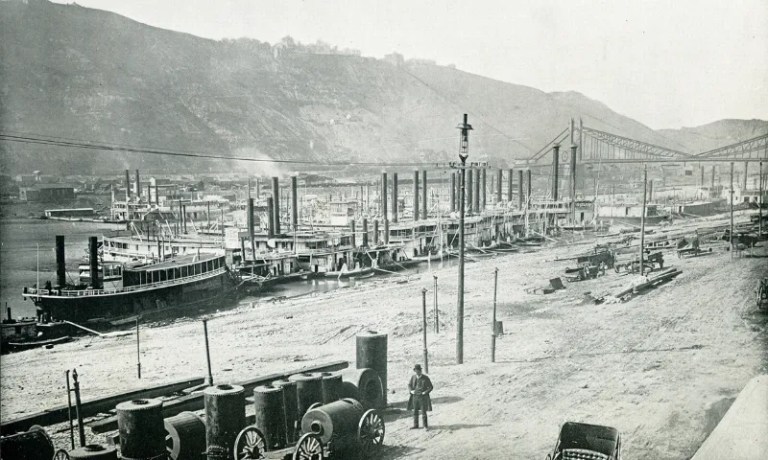
Pittsburgh water quality throughout the years
Today, The Pittsburgh Water and Sewer Authority provides service to more than 300,000 customers producing an average of 70 million gallons of water daily. Two facilities treat Pittsburgh tap water: one near Aspinwall and the second, known as the Microfiltration Plant, in Highland Park. Uniquely, the city of Pittsburgh only draws its water from the Allegheny River with no need for groundwater sources. As water travels over the land, it picks up naturally occurring minerals and animal or human pollution. This often manifests as a musty or earthy odor or taste, especially after construction or lots of rain.
According to a recent Pittsburgh Water Quality report, industrial processes, discharge from power plants, the release of petroleum from pipeline ruptures, and stormwater runoff may contaminate drinking water. Like many older cities, most of the Pittsburgh water infrastructure consists of cast iron pipes, the industry standard until the mid-1960s. Prone to corrosion and biofilm, older cast iron pipes develop clusters of corrosion and bacteria along the inside of the pipe. Sometimes these clusters break off and travel with your water to your faucet, resulting in water cloudiness, red water, off-taste, and odor.
Pittsburgh has relied on the Allegheny River as a steady source of drinking water as far back as its original residents, the Iroquois, and Lenape tribes. European settlers would inherit the abundant water source. However, by the 17th century, local spring water often tasted of sulfur, and wells, which relied on underground water that could offset the taste, were difficult to dig.
For sanitary reasons and against the ever-present danger of fire, officials established the first formal Pittsburgh water system. By 1802, it consisted of four 47-foot deep wells with pumps. It didn’t take long for the city’s booming population to outgrow this simple system. In 1828, Pittsburgh developers unveiled a river pumping station and a one-million-gallon reservoir. This infrastructure would continue to expand into Pittsburgh’s current water management system.
The 19th century saw another hurdle for the city’s water managers: waterborne illness. Likewise, contamination of the Allegheny reached such disastrous levels that the need for a treatment plant and process became obvious. After years of debate over design, Pittsburgh’s first filtration and treatment plant was constructed in 1907. By the 1950s, Pittsburgh water, formerly only treated with chlorine, needed a purification upgrade. Alum was introduced into the process – until the construction of a full chemical treatment plant arrived in 1962.
Lower your water costs
Culligan Quench bottleless water coolers can hydrate your entire staff while saving you money. See how much you can save by going bottleless.
How did we calculate this estimate? Learn about our methodology, assumptions, and data sources.
| Bottleless water cooler rental | Jug delivery | Bottled water delivery | Premium bottled water |
|---|---|---|---|
| $0 | $0 | $0 | $0 |
Recommended Products
Use the calculator and we’ll recommend a few products here that will fit your needs!
Get your free estimate today.
Talk to an Pittsburgh Culligan Quench water expert to find the best water solution for your space.
Culligan Quench filtration solutions.
Backed by 85 years of Culligan expertise, Culligan Quench has focused exclusively on providing businesses with the highest quality filtered water. This commitment to doing one thing well has made us the trusted water authority for over 75% of the Fortune 500. We offer the best bottleless water coolers, ice machines, sparkling water dispensers, and coffee brewers to fit any workplace. No matter your location, company size, or industry, we have a filtered water solution that is right for you
Play videoCulligan Quench
of Pittsburgh
Proudly providing businesses with clean, filtered drinking water in the greater Pittsburgh Metro Area.
| Mon: | 8 AM – 8PM |
| Tues: | 8 AM – 8PM |
| Wed: | 8 AM – 8PM |
| Thur: | 8 AM – 8PM |
| Fri: | 8 AM – 8PM |
| Sat: | Closed |
| Sun: | Closed |
Frequently asked questions
Is Pittsburgh tap water safe to drink?
Yes, Pittsburgh’s tap water is considered safe to drink and meets all federal safety standards. Pittsburgh Water uses corrosion control measures, including orthophosphate, to reduce lead exposure. The city has replaced more than 12,000 lead service lines, and recent test results show lead levels well below the Environmental Protection Agency’s action level of 15 parts per billion (ppb).
While some residents report a metallic taste, this is typically due to disinfection practices, not contaminants. For improved taste or added reassurance, filtered water coolers are a smart, workplace-friendly solution.
Does Pittsburgh have hard water?
Yes, Pittsburgh has moderately hard water, which means levels range from around 120-180 milligrams per liter (mg/L). The mineral content mainly consists of calcium and magnesium and comes from the city’s natural water sources, including the Allegheny and Monongahela Rivers.
While safe to drink, hard water can cause mineral buildup in pipes, water heaters, office appliances, and cups, reducing efficiency and increasing maintenance needs over time. In commercial settings, it may also impact soap lather and leave spots on dishes or fixtures.
Water coolers, filtered ice machines and sparkling water dispensers are designed to address hardness and can help extend equipment lifespan and improve day-to-day water use in the workplace.
Water you can trust. From experts you can trust.
Over 120,000 companies, big and small, trust Culligan Quench for cleaner, safer, and great-tasting water.