Quality Hartford water services
Areas served
- Hartford County
- Tolland County
- Middlesex County
- Litchfield County
- New Haven County
- Windham County
- New London County
- Fairfield County
Bottleless dispensers fit for any business.
Bottleless water coolers
Offer a more sustainable solution for cleaner, better-tasting water on demand.
Ice
machines
Fast, efficient, and reliable ice and water machines with advanced filtration.
Sparkling water dispensers
Bottomless bubbles with built-in filtration for your modern workplace.
Filtered coffee brewers
Better water makes better coffee. Give your people great-tasting coffee from best-in-class brewers.
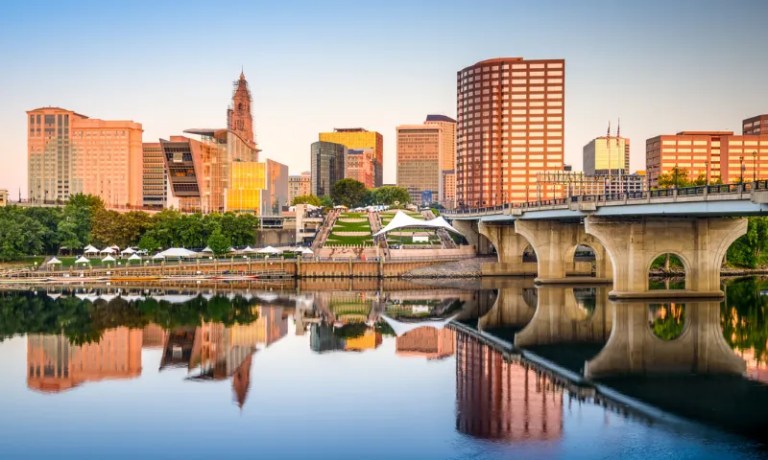
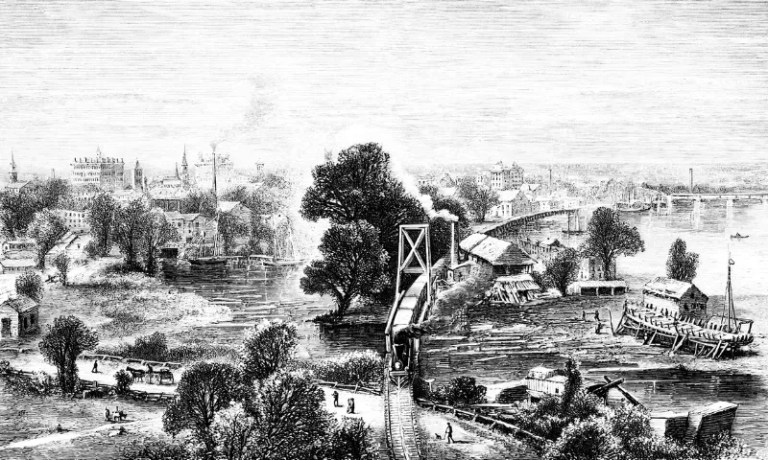
Hartford water quality throughout the years
The Metropolitan District continues to monitor and filter Hartford tap water, with additional treatment handled by the Reservoir No. 6 plant in Bloomfield. According to the recent Hartford Water Quality report, the city remains in compliance with federal requirements. However, urban and agricultural runoff often contaminates open surface water reservoirs, and some samples may still contain microbial contaminants (such as viruses or bacteria), salts, metals, and pesticides.
Like many older American cities, substantial portions of Hartford’s water infrastructure use cast iron pipes, a plumbing standard until the mid-1960s. Older cast iron pipes are prone to corrosion and biofilm contamination from chemical reactions, which result in “rotten egg” taste and smell. To combat the corrosion and biofilm contamination, treatment facilities add chlorine, which gives water a bitter, metallic taste.
The fertile Connecticut River Valley and its abundance of fresh water immediately impressed European settlers when they first arrived in Hartford. But over time, residents habitually dumped waste into their waterways, making it dangerously unsanitary. By 1867, locals could no longer source Hartford drinking water from the Connecticut River. To provide clean water, Hartford city engineers built a multi-reservoir system, including the Nepaug Reservoir which used gravity to bring water from the northwest hills of Connecticut. Then, in 1929, a public non-profit municipal corporation, The Metropolitan District, formed to modernize the drinking water and sewer system.
As the city grew, planners constructed additional reservoirs and dams to bolster Hartford water supply. In 1948, they constructed the Barkhamsted Reservoir, the largest single water supply reservoir in the state. The city also initiated aggressive cleanup programs of its rivers and watersheds. Hartford continues to source from surface water outlets in drainage areas that cover approximately 89.7 square miles. These sources include the 30.3-billion-gallon Barkhamsted Reservoir, impounded by the Saville Dam, and the 9.5-billion-gallon Nepaug Reservoir, created by the Phelps Brook and Nepaug Dams.
Lower your water costs
Culligan Quench bottleless water coolers can hydrate your entire staff while saving you money. See how much you can save by going bottleless.
How did we calculate this estimate? Learn about our methodology, assumptions, and data sources.
| Bottleless water cooler rental | Jug delivery | Bottled water delivery | Premium bottled water |
|---|---|---|---|
| $0 | $0 | $0 | $0 |
Recommended Products
Use the calculator and we’ll recommend a few products here that will fit your needs!
Get your free estimate today.
Talk to an Hartford Culligan Quench water expert to find the best water solution for your space.
Culligan Quench filtration solutions.
Backed by 85 years of Culligan expertise, Culligan Quench has focused exclusively on providing businesses with the highest quality filtered water. This commitment to doing one thing well has made us the trusted water authority for over 75% of the Fortune 500. We offer the best bottleless water coolers, ice machines, sparkling water dispensers, and coffee brewers to fit any workplace. No matter your location, company size, or industry, we have a filtered water solution that is right for you
Play videoMeet our team
Your local Culligan Quench team in Hartford knows the area’s unique water quality. Schedule a quick call with one of our water experts, and we’ll connect you with personalized service tailored specifically to your zip code.
Patrick White
Vice President, Sales (East)
Kevin Doherty
Vice President, Service
Chris Knox
Vice President, Operations
Chris Turano
Senior Vice President, Care and Field Service
Culligan Quench of Hartford
Proudly providing businesses with clean, filtered drinking water in the greater Hartford Metro Area.
| Mon: | 8 AM – 8PM |
| Tues: | 8 AM – 8PM |
| Wed: | 8 AM – 8PM |
| Thur: | 8 AM – 8PM |
| Fri: | 8 AM – 8PM |
| Sat: | Closed |
| Sun: | Closed |
Frequently asked questions
Is Hartford, CT, tap water safe to drink?
Yes, Hartford’s tap water is generally safe to drink. The Metropolitan District (MDC) Water Quality Report says the local water meets or exceeds all state and federal standards, with over 140,000 tests conducted annually to ensure quality. Recent testing found no detectable levels of perfluoroalkyl and polyfluoroalkyl substances (PFAS).
However, aging infrastructure can introduce contaminants, such as lead, into tap water. For businesses that want to ensure optimal water quality and taste, installing point-of-use filtration systems, with filtered water ice machines and sparkling water dispensers, can reflect a sense of quality and offer peace of mind.
Does Hartford have hard water?
Hartford’s water is considered soft, with a hardness level of approximately 15 milligrams per liter (mg/L). This low mineral content means less likelihood of scale buildup in pipes and appliances, and more efficient soap usage. However, water quality can vary depending on your building’s plumbing. For businesses seeking consistent water quality across all fixtures, bottle-free water systems serve as a sustainable and reliable solution.
Water you can trust. From experts you can trust.
Over 120,000 companies, big and small, trust Culligan Quench for cleaner, safer, and great-tasting water.