Leading water company in Columbus, Ohio
Areas served
- Delaware County
- Franklin County
- Licking County
- Morrow County
- Fairfield County
- Perry County
- Union County
- Madison County
- Pickaway County
- Knox County
- Champaign County
- Logan County
- Greene County
- Clark County
- Montgomery County
- Ross County
- Hocking County
- Vinton County
Bottleless dispensers fit for any business.
Bottleless water coolers
Offer a more sustainable solution for cleaner, better-tasting water on demand.
Ice
machines
Fast, efficient, and reliable ice and water machines with advanced filtration.
Sparkling water dispensers
Bottomless bubbles with built-in filtration for your modern workplace.
Filtered coffee brewers
Better water makes better coffee. Give your people great-tasting coffee from best-in-class brewers.
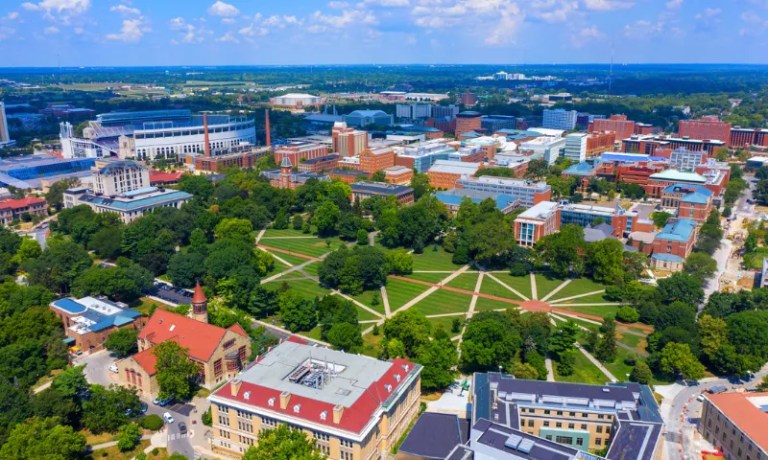

Columbus water quality throughout the years.
Today, residents can still trace Columbus tap water back to Scioto River and Big Walnut Creek, as well as from ground water pumped from sand and gravel deposits of the Scioto River Valley. According to a recent Columbus Water Quality Report, all three sources of water have a high susceptibility to contamination from spills or releases of chemicals.
Although the city provides water treatment services, residents may still encounter rusty, cloudy, or musty tap water due to storm runoff, chlorine, and other contaminants.
The Borough of Columbus (and future Ohio state capital) was established in 1816 along the shores of the Scioto and Olentangy Rivers. The confluence of these two water sources, just north of downtown, played a vital role in the region’s water access and management that continues to this day. The city of Columbus has always stood at the forefront of water treatment and management. City planners first dammed the Scioto River in 1908 with the construction of the Griggs Reservoir, and later with the O’Shaughnessy Dam in 1925. Once hailed the “best inland city reservoir and dam in the United States,” the O’Shaughnessy stored enough water to serve double the city population at the time.
After a series of typhoid outbreaks, scientists and engineers combined forces to design a water system that changed the world. Known as “The Columbus Experiment”, treatment facilities drastically improved Columbus water quality by virtually eliminating water-borne illnesses like typhoid and cholera that had plagued the city for decades. Post-World War II, the population was booming, and city planners sprang into action to meet demands of new residents; The Hoover Reservoir became the city’s largest dam structure, at 90 feet high and 83 feet wide at the base. Completed on the Big Walnut Creek in 1955, it took 5 days to fill with water.
Lower your water costs
Culligan Quench bottleless water coolers can hydrate your entire staff while saving you money. See how much you can save by going bottleless.
How did we calculate this estimate? Learn about our methodology, assumptions, and data sources.
| Bottleless water cooler rental | Jug delivery | Bottled water delivery | Premium bottled water |
|---|---|---|---|
| $0 | $0 | $0 | $0 |
Recommended Products
Use the calculator and we’ll recommend a few products here that will fit your needs!
Get your free estimate today.
Talk to an Columbus Culligan Quench water expert to find the best water solution for your space.
Culligan Quench filtration solutions.
Backed by 85 years of Culligan expertise, Culligan Quench has focused exclusively on providing businesses with the highest quality filtered water. This commitment to doing one thing well has made us the trusted water authority for over 75% of the Fortune 500. We offer the best bottleless water coolers, ice machines, sparkling water dispensers, and coffee brewers to fit any workplace. No matter your location, company size, or industry, we have a filtered water solution that is right for you
Play videoMeet our team
Your local Culligan Quench team in Columbus knows the area’s unique water quality. Schedule a quick call with one of our water experts, and we’ll connect you with personalized service tailored specifically to your zip code.
Patrick White
Vice President, Sales (East)
Kevin Doherty
Vice President, Service
Chris Knox
Vice President, Operations
Chris Turano
Senior Vice President, Care and Field Service
Culligan Quench of Columbus
Proudly providing businesses with clean, filtered drinking water in the greater Columbus Metro Area.
| Mon: | 8 AM – 8PM |
| Tues: | 8 AM – 8PM |
| Wed: | 8 AM – 8PM |
| Thur: | 8 AM – 8PM |
| Fri: | 8 AM – 8PM |
| Sat: | Closed |
| Sun: | Closed |
Frequently asked questions.
Is Columbus tap water safe to drink?
Yes, Columbus tap water is generally safe to drink. The city monitors tap water quality and issues an annual water quality report to ensure transparency about tap water safety.
Water in Columbus comes from 22 groundwater well sources. The water is passed through two filtration plants before entering the municipal supply. The city of Columbus conducts regular testing to ensure contaminants in the city’s tap water are within EPA-allowed levels. However, some level of contaminants is allowed, which is why many businesses opt for filtered water coolers to ensure safer, tastier drinking water for staff and visitors.
Does Columbus have hard water?
Yes, Columbus water is considered moderately hard. It has a rating of 120 parts per million (ppm). While this may not be especially noticeable when you use the water, that’s enough mineral content to create buildup in pipes over time. This level of hardness can also impact appliances and equipment. Businesses that want to ensure the longevity of appliances or have equipment that’s especially sensitive to water quality may want to invest in filtration systems.
Water you can trust. From experts you can trust.
Over 120,000 companies, big and small, trust Culligan Quench for cleaner, safer, and great-tasting water.