How Much Does a Commercial Ice Machine Cost in 2026?

Commercial ice maker pricing varies widely based on capacity, ice type, features and ownership costs, making it important to evaluate both upfront and long-term expenses before deciding to buy or rent.
- Machine size and production capacity: Smaller units producing up to 250 pounds of ice per day are more affordable, while high-capacity machines for large operations cost significantly more.
- Ice type matters: Standard ice types like cube or half-dice ice are typically less expensive, while specialty options such as nugget, flake or gourmet ice increase equipment costs.
- Features that affect pricing: Advanced filtration, UV sanitization, touchless operation, self-cleaning functions and energy efficiency can raise upfront costs but improve hygiene and efficiency.
- Hidden ownership costs: Installation, maintenance, repairs, water and energy use and service plans all contribute to the true cost of owning an ice machine.
- Buying versus renting: Purchasing offers full ownership but higher upfront and maintenance costs, while renting provides lower initial investment, predictable monthly expenses and greater flexibility as business needs change.
Summary: Commercial ice machines range from $1,500 to over $15,000 to purchase, with costs varying based on application, output capacity, and ice type. To understand the total cost of ownership, businesses must factor in professional installation, water filtration, and ongoing maintenance.
Commercial ice machines industries such as food service, hospitality, construction, healthcare, municipal, fleet-based distribution and other businesses that need reliable ice throughout the day. But the sticker price only tells part of the story. A small undercounter unit may cost around $1,500 to $2,500, while a larger ice machine may run $5,000 to $10,000.
To choose the best ice maker for business use, consider the total cost over time, including installation, utilities, filtration, maintenance, repairs, and replacement.
Key factors that influence total cost of ownership
Commercial ice machine cost depends on daily production, storage capacity, and machine design.
- Capacity: Higher-output machines cost more because they produce more pounds of ice per day. Larger bins support business operations during peak demand, but they also add to the total cost.
- Ice type: Standard cube ice is typically the most affordable, while specialty ice (nugget, flake, or gourmet) involves more complex mechanical components, increasing both purchase price and maintenance needs.
- Water quality: Water quality can also affect long-term value because hard water may increase scale buildup, filter needs, and maintenance frequency.
Industry use cases: matching ice machine to business
The “best” machine is defined by your environment and how your staff or guests consume ice.
| Business Type | Recommended Setup | Ice Type | Why? |
| Restaurants & Bars | Modular Head + Bin | Crescent / Half-Dice | High displacement (saves money on liquid products) and high volume for peak shifts |
| Offices | Quench 960/965 Series | Nugget (Chewable) | Quiet operation and popular for employee hydration; touchless dispensing for sanitation control |
| Healthcare | Quench 960-16 | Nugget / Flake | Easy to chew for patients, and molds to cold packs. |
| Hotels | Quench 980-90 / 998 | Nugget / Hotel Cube | Durable for self-service, and high storage capacity for guests |
Buying vs. renting commercial ice machines
Buying a commercial ice machine can make sense when a business wants full ownership and can manage service internally. However, ownership also means taking responsibility for installation, maintenance, emergency repairs, and eventual replacement.
Renting can help reduce those unknowns. A managed rental shifts the conversation from a large upfront equipment purchase to a more predictable monthly cost. For many businesses, that predictability matters as much as the machine itself.
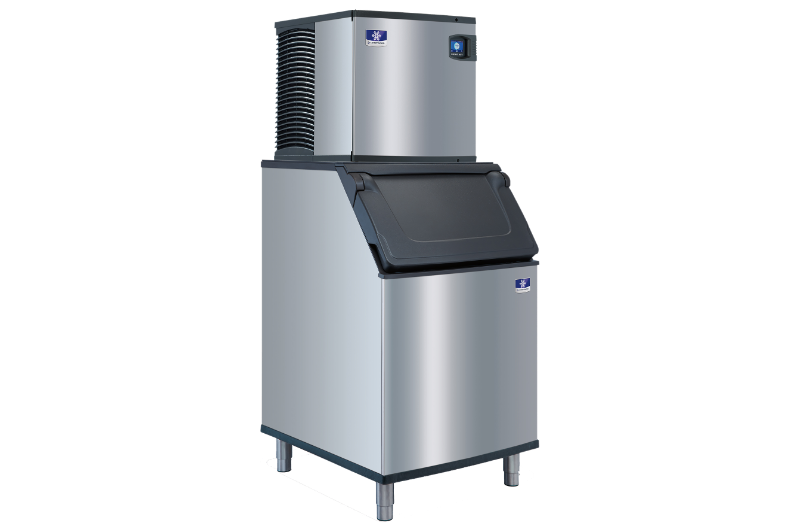
Culligan Quench’s 998 Commercial Bin Ice Machine produces up to 575 pounds of half-dice per day for high-demand workplaces.
Energy and water efficiency: ENERGY STAR savings
Energy and water usage can add additional costs over the life of a commercial ice machine. ENERGY STAR certified batch-type commercial ice makers are about 10% more energy efficient and 20% more water efficient than standard models. ENERGY STAR also says certified batch-type models can save businesses about 700 kWh and $150 annually, or about $1,200 over the product’s lifetime.
Continuous-type machines, including some flake and nugget ice makers, can also offer efficiency benefits. ENERGY STAR says certified continuous-type ice makers are about 16% more energy efficient and can save businesses about 1,350 kWh and $170 annually.
What is the average life of a commercial ice machine?
Commercial ice machines need routine service to continue producing clean, reliable ice. That usually includes cleaning, sanitizing, descaling, replacing filters, inspecting components, and checking drainage.
A well-maintained commercial ice machine typically lasts 7 to 10 years. Without regular cleaning and filter changes, that lifespan can drop significantly. Annual maintenance may cost $200 to $600 or more, depending on machine type, environment, and service needs. Break fix repairs can add hundreds or thousands of dollars.
Ted Hertz, Vice President of Commercial Drinking Water for Culligan International
Types of commercial ice machines and pricing
Different machines serve different business needs. A compact ice making machine for business break rooms will not cost the same as a high-output machine for a restaurant, hotel, or production facility.
Common options include countertop ice machines, undercounter ice machines, freestanding ice dispensers, bin ice machines, and ice bagger or vending systems. The right choice depends on available space, daily ice consumption, storage requirements, and ice type.
Does the ice type affect the machine’s price?
Yes. Standard cube ice machines are generally cheaper. Specialty ice, such as nugget ice, can be more expensive because of more complex mechanical components and higher filtration expectations.
Cubers, flakers, and nugget ice machines
Ice type affects both price and performance. Cube and half-dice ice machines are common for beverages and general restaurant use, and they are usually more affordable. Flake ice is often used in product preservation like poultry and meat processing or grocery display applications. Nugget ice is most popular in healthcare because it is soft, chewable, and easy to dispense.
Is specialty ice worth it?
Specialty ice can be worth the added cost if the ice improves the customer, patient, or employee experience. Nugget ice may be a smart choice for restaurants, hotels, healthcare settings, and high-end office spaces. If your business mainly needs ice for standard beverages, cube or half-dice ice may deliver better value.
How much does it cost to install an ice machine?
Hidden costs can quickly change the real price of a commercial ice machine. Professional installation often ranges from $500 to $1,500 and may include plumbing, electrical setup, drainage, and placement. Water filtration adds another cost, but it can help protect machine performance and improve ice quality and taste.
Other costs may include utility use, cleaning supplies, preventive maintenance, replacement filters, emergency repairs, downtime, and replacement equipment.
Purchase Units vs Rental Units
| Cost Category | Buying premium (e.g., Hoshizaki/Manitowoc) | Culligan Quench Managed Rental |
| Upfront Cost | $3,000 – $13,000+ | Price of installation. See above. |
| Installation | $500 – $2,500 | $220-$2,000 |
| Monthly Fee | $0 (plus utilities) | $150 – $500+ |
| Filtration | $300 – $500 (Initial) + annual filters | Included (Culligan Certified) |
| Repair Risk | Owner pays 100% ($1,500+ for compressor) | $0 (Covered by Quench) |
| Sanitation | Manual/Owner-scheduled ($300+/visit) | Routine preventative maintenance |
How much does a commercial ice machine cost to run?
Buying usually comes with a higher upfront cost, paid installation, maintenance responsibility, repair risk, filter replacement costs, and limited upgrade flexibility. Renting from Culligan Quench can lower the initial cost and provide a more predictable monthly expense, often with installation, maintenance, repairs, filter changes, and upgrade flexibility included.
Why is an ice machine rental a good choice for your business?
Business needs change. A small café may grow into a busy restaurant. A growing office may need more ice as headcount increases. A hotel may need more capacity during peak travel seasons.
When you own a machine, upgrading often means selling, storing, or replacing the old unit. When you rent, it can be easier to adjust equipment as your needs change.
A managed rental is often the smarter choice for organizations focused on cost efficiency and operational simplicity. Culligan Quench rental service can include installation, preventive maintenance, repairs, and filter changes in the monthly rental fee. That helps businesses avoid surprise service costs and reduce the internal work required to keep ice machines running properly.
If you’re comparing commercial ice machine cost against long-term value, look beyond the purchase price. The right ice machine is the one that gives your business reliable ice, clear service expectations, and fewer surprise costs.
Discover ice machine rental solutions with Culligan Quench
If your business is looking for the right ice equipment, it’s essential to consider all the factors that influence your total cost. Fortunately, renting from a trusted provider like Culligan Quench offers flexibility, lower initial expenses, and predictable ongoing costs, along with professional maintenance to keep your unit running smoothly year-round.
Explore Culligan Quench commercial ice machines to find the perfect rental solution tailored to meet your needs, or get a free estimate to get started.